Conservation — Debbi Dolan
Bioengineered algae
clean up microplastics
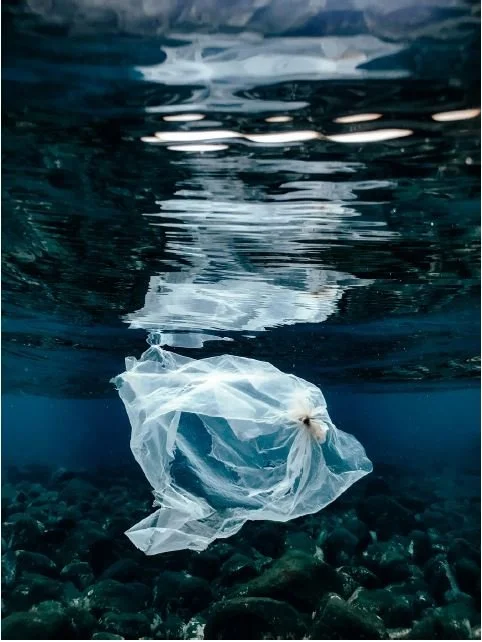
Photo: Naja Bertolt Jensen on Unsplash
Chemist Susie Y. Dai and her team at Texas A&M University were trying to create a strain of algae that would produce aviation fuel and came across an exciting discovery. The engineered algae turned out to be effective at siphoning up microplastics. Dai is a now a professor at the University of Missouri.
Microplastics are miniscule plastic particles that pollute globally and have been found in human brains. The sun and waves break plastic down into smaller and smaller pieces over time. Many studies have found microplastics are now inside human bodies and hurting people’s health. Microplastics are linked to a range of serious health issues, including cancers, respiratory issues and digestive diseases.
Dai’s engineered algae and the tiny pieces of plastic are both hydrophobic, meaning they repel water and attract each other. By changing the genetic code of the algae, the scientists can increase its stickiness factor, removing more than 90% of microplastics in a water sample within an hour. The engineered algae attach to the microplastics, then sink to the bottom of the water. The plastic-algae sediment can then be collected and even potentially turned into a recycled product. Dai says “What we hope to do is upcycle the whole stuff into another bioplastic,” she said. “… Not only can we remove (microplastics) from the solution, we can also make a useful product.”
Julie Peller is a professor of chemistry at Valparaiso University. Her work has focused on the Great Lakes and water systems in northern Indiana. She was not involved in Dai’s study but did other research on how microplastics and algae interact.
Peller has found that microplastics like clothing fibers stick to algae, even without bioengineering.
“The reality is, when this algae is in the water, it’s like a little vacuum cleaner,” Peller said. “It pulls up all kinds of stuff that’s in the water.”
Peller advocates for cutting down use and production of plastic so less of it ends up in the environment. She acknowledges it can be difficult, because plastic is often the cheapest option for businesses.
But, Peller notes consumers have more power than they realize.
“Make it a journey,” Peller said. “Go, ‘OK, where’s the first place that I can eliminate plastic? Where’s the next one, where’s the next one, where’s the next one?’ And over time, if people in society decide we don’t want all this stuff, changes can happen.”
So far, Dai’s bioengineered algae seem to be good at grabbing both larger and smaller sizes of microplastics. But there are still a lot of limitations that will make it hard to scale the process up, including finding ways to grow large amounts of the algae. And she needs to study the process outside of the lab, in real-world scenarios. “We try to develop new methods to maintain sustainability and also make people healthier and happier.”
Source: Kate Grumke | Harvest Public Media | March 6, 2026